
University of Florida professor explores the consequences of space travel on the human body
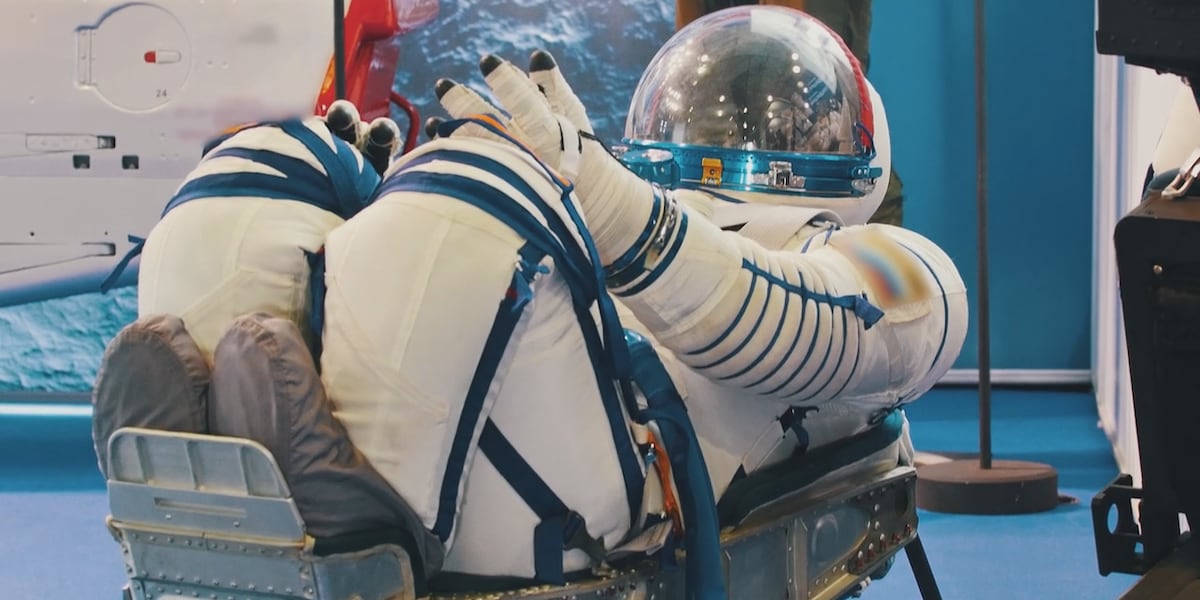
GAINESVILLE, Fla. (WCJB) – In this week’s Tech Tuesday, our partners at UF Innovate and SCAD Media highlight Dr. Rachael Seidler, whose research explores how the central nervous system and brain structure adapt to the challenges of space travel, as well as how these changes impact astronauts once they return to Earth.
“Have you ever wondered what it takes to keep astronauts healthy? Let’s learn more. Dr. Seidler, tell us a little bit more about who you are and what you do,” said Elora Duong, host of UF Innovate.
“Sure. I’m Professor Rachael Seidler. I work at the University of Florida. I’m a professor in applied physiology and kinesiology. I’m also the deputy director of UF’s Astraeus Space Institute, and I get to do some really exciting work. I study how the human brain and human performance change when people travel to space,” said Dr. Rachael Seidler, professor at UF’s Department of Applied Physiology & Kinesiology and Neurology.
“And what’s the importance of this work?” asked Duong.
“Yes. I think it’s important for two different reasons. One is that we have more and more people going to space. I’m sure you’ve noticed it’s not just NASA astronauts. Astronauts are highly selected on a range of factors. They’re incredibly educated. They train extensively before they go to space. We are also now seeing people going to space [who] do not have very extensive training. They were not selected for this. They are choosing to buy a seat. And so, my lab [has actually] started working with a couple of the commercial crew companies to recruit and measure their clients to see how their brain and behavior changes as well. Because we have no idea how someone with a range of maybe pre-existing conditions might respond to this extreme environment in comparison to NASA or ESA astronauts [who] are so selected and trained,” said Dr. Seidler.
“And so, we need to learn about how being in this really extreme environment might impact their health, their brain function, their performance, [and] whether or not there are any lasting effects. And the other reason we should study this, I think it’s super exciting from a neuroplasticity and adaptation standpoint to see how human physiology adapts to an environment that is outside of our evolutionary history,” Dr. Seidler continued.
“If you’re interested in learning more about space health, stay tuned for more updates from the Neuromotor Behavior Lab,” said Duong.
Click here to subscribe to our newsletter.
Copyright 2025 WCJB. All rights reserved.
link