
TTG – Travel industry news

“I understand you can dismiss if you follow a fair, transparent probationary period,” Naru advised, adding media reports suggest probationary periods are likely to settle at around six months.
“This is no different to what I advise my clients now. One month is too short, and if [an employee is] in a senior level role, you need at least six months.”
Naru told delegates employers will also need to take care measuring performance during probationary periods.
She said she wasn’t in favour of the government’s proposed changes, warning it could stymy the recruitment market and increase tribunal claims. “If this is introduced, it’s going to create more work for employers and they will be settling cases left, right and centre.”
Back to the office?
The event started with a polarising debate about whether it was time to return to the office en masse, featuring an expert panel spanning businesses with a range of different working procedures.
Xian Mayes, the Advantage Travel Partnership’s people chief, insisted that if the consortium were to ask its team to make a wholesale return to the office, she would lose two-thirds of her staff overnight.
Advantage currently operates a fully remote policy, but Mayes insisted this had not led to any disconnection between its teams and that employees were continuing to join events and meet with members and suppliers. “They’re not permanently stuck in a bedroom,” she said. “It’s their work base.”
However, she said the focus had to be on ensuring employers don’t let their workplace culture “slip” or allow employees to feel alienated.
Colin Pegler, Resort Marketing’s group managing director, is a stern advocate of office working. “There’s always going to be a need for some flexibility,” he said.
“But if you want a [workplace] culture, if you want to onboard new talent and develop people in the business, you need them in front of you. You do business face-to-face, you need people there to spark ideas and to nurture talent.”
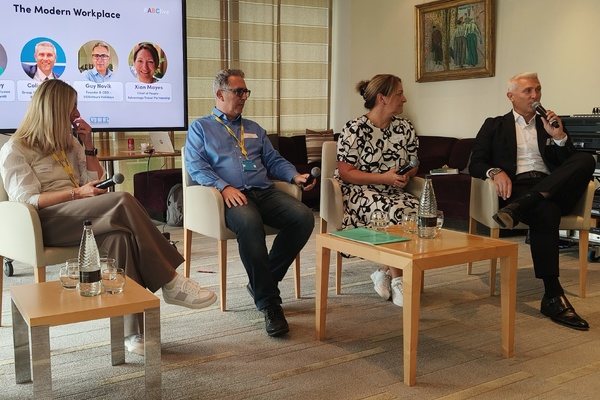
The panel had opposing stances on office working versus homeworking
Pegler added reticence about working in an office environment could hamper people’s progress. “Bosses promote people they see in the office they’re impressed by on a day-to-day basis, by people who impress them face-to-face, not sitting behind a video screen.”
USAirtours founder and chief Guy Novik, whose 85 staff work almost full remotely, said: “If there wasn’t a good culture in the organisation before, whether you’ve got people working from home or not, is irrelevant.”
Novik conceded working from home put more pressure on managers to “manage better”. “What’s harder for managers is the amount of outreach you have to do if you have staff working from home,” he said.
“You really have to have it as a permanent part of your people management skills. In the office, you could afford to be a little bit lazier because people would learn by casual observation. As an organisation, you have to address that deliberately.”
A four-day week?
The panel agreed a four-day working week was unlikely to be sustainable for travel businesses. Mayes joked that while she personally would love a four-day week, “professionally, it feels like a nightmare – managing expectations, your suppliers”.
“If the world decides we’re going to have a four-day working week – brilliant,” she said. “But that’s not going to happen. It’s frustrating in a small business, with a small team, if people aren’t available. It creates more pressure.”
Novik agreed, adding: “Four days is part-time. There is no way you should be doing compressed hours – that’s too many over four days and that’s going to be bad for quality and quantity.”
Althams Travel is one travel business that has successfully implemented a four-day week; TTG caught up with managing director Sandra McAllister earlier this year to find out how the team make it work.
Neurodivergence ’as big as gender equality’
Jude Harvey, equity, diversity and inclusion consultant at Realise HR, highlighted the need to “put an inclusion lens” on everything in the workplace.
She highlighted how we one in seven children estimated to have ADHD, the number of adults being diagnosed was likely to soar – leading to workplace and work-life balance adaptions.
“Parents are learning what [ADHD] looks like and are going – ‘that’s me’,” she said.
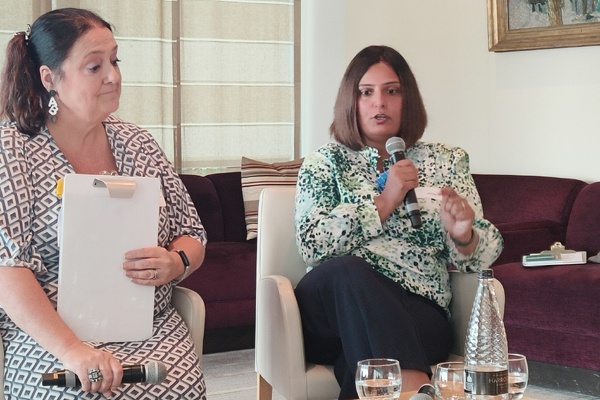
TravLaw partner Ami Naru said flexible working would likely become default
Harvey said these people, many of whom were struggling to cope in the workplace, were then getting assessed and learning – in some cases – it wasn’t burnout but ADHD all along.
She said “from an HR perspective”, neurodiverse was an enormous topic. “We’re talking about it the way we were gender 10 years ago.”
Picking up on the office versus homeworking debate, Harvey added: “People coming into the office can be challenged by the office environment, particularly if they are neurodivergent. They spend a lot of time having to adapt their behaviours.”
Flexible working the norm
Finally, Naru warned flexible working would likely become default, with the government also looking at legislating in this area.
She told delegates that since April this year, employees have been able to request flexible working from the start of their employment, with employers able to reject these on the basis of one of eight statutory reasons.
But government proposals, said Naru, could make flexible working the default “unless the employer can give a very good reason”.
Naru added new powers for tribunals to review employers’ decisions would also make it “much harder for employers to knock back requests”.
link