Portugal travel, food and culture
The soulful soundtrack of Lisbon
A good friend and I are deep into a steaming bowl of traditional Portuguese clams when Teresinha Landeiro takes the stage at the fado house Fama de Alfama. She is one of the big names on the fado scene, and despite her youth and humble size, she belts out what sounds like years of pain, longing and pride. Shortly after, she tightens the grip and has us all in tears. If Lisbon had a soundtrack, fado would probably be it. This traditional music, performed mostly in the old port neighbourhoods by un-mic’d singers accompanied by a Portuguese and a Spanish guitar, is increasingly popular with tourists, looking to have a true Portuguese experience.
Tonight, we somehow end up lingering on our wine until all the guests have left the restaurant and the atmosphere shifts. The musicians re-enter the stage, now with glasses overfilled with draft beer, lively debating amongst themselves. The small space has transformed into a fado jam session, with fadistas from nearby restaurants done with their gigs for tonight, now meeting up with their friends and colleagues — one surprisingly resembling Mac Miller. When a traditional, full male choir from Alentejo starts singing at the next table, it feels like an earthquake, voices deep, strong and pure fills the space and reverberate between the walls. There is much respect, laughter and tears as the night goes on into the small hours. Before we leave, ears and stomachs full, Landeiro confides in me: “Fado is like life, we have happy times and sad ones. The Portuguese like to suffer a little but we only miss what we love.”
And you cannot speak of fado without speaking of ‘saudade’, which encompasses that distinct Portuguese feeling of a deep emotional, melancholic longing or nostalgia. A familiar sentiment in a country that historically has been a big seafaring nation, a coloniser and suffered a dictatorship — there has been much to long for.
The origins of fado
Today, fado is widely acknowledged as an elevated culture and a fundamental part of the Portuguese cultural architecture. But fado’s roots seem intrinsically tied to the country’s history as a nation that influences and gets influenced. At the Museu do Fado in Alfama, experts lead me on the way to learn the historical background of the genre:
In colonial-era Lisbon, some port districts hosted a diverse population including African sailors, freed people from colonies, and Afro‑Brazilian migrants. They danced to batuque, lundu, and other African‑rooted music in public spaces, influencing local musical culture. Mixed with Portuguese folk ballads and Moorish music, scholars argue that early fado absorbed some of lundu’s rhythm and performance energy, hence becoming a mix of music rooted not just in Portugal but also in Africa. Since 2011, the “creole genre”, as scholar Rui Vieira Nery called it, has been UNESCO Intangible Cultural Heritage, and the genre has not stopped reinventing itself, not least outside the fado houses.
The queen of fado
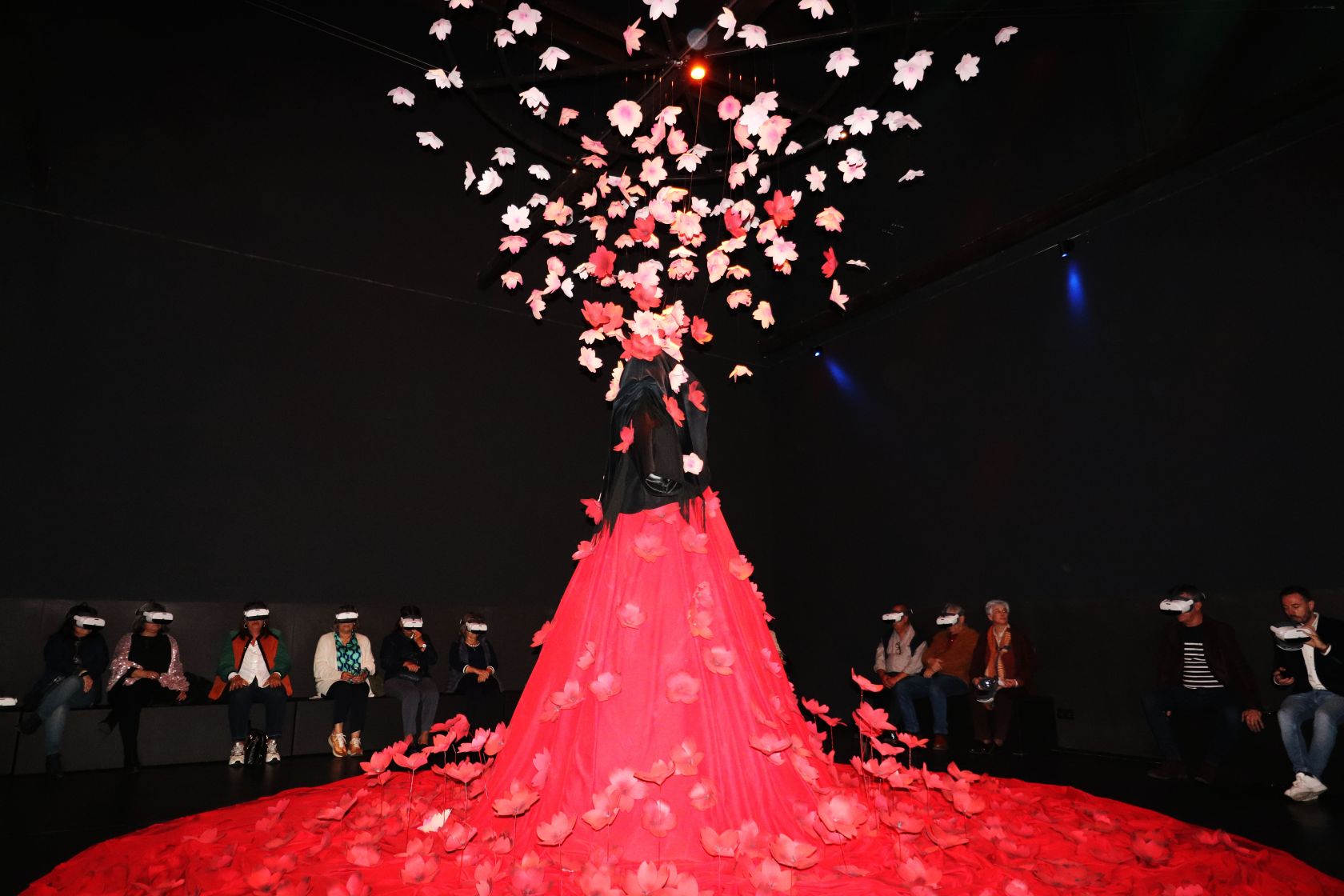
“Not only tourists, but many Portuguese people are not aware of where fado comes from either,” says Daniel Delaunay, a Portuguese composer and fado pianist. He is giving me a tour of the Ah Amália Experience, the immersive and digital museum about the queen of fado, Amália Rodrigues. The Lisbon museum recently won Europe’s Leading New Tourist Attraction 2025 at the World Travel Awards. Today, a fado icon and deemed the greatest singer Portugal ever had, Amália is a national treasure. But it wasn’t always like this.
“Before fado was fado, it was sung among the workers in the fields and then it moved with them to the cities with the industrialisation in the early 19th century. It was the music of the underdogs, the poor and the criminals – sung on street corners and in bars and brothels,” he elaborates.
Amália herself was born into poverty in 1920 and “discovered” selling fruit in the port of Lisbon. She rose to fame abroad, selling out stages from New York to Japan, but was both oppressed and used by the Portuguese dictatorship. A common misconception still lingering today is that she was working for the regime, but on the contrary, she funded the opposition parties. It would be nine years after the fall of the dictatorship that Amália finally performed solo in a big auditorium in her home country – the place she deeply wanted to be loved and accepted.
Delaunay’s great aunt was Amalia’s close friend and seamstress, Ilda Aleixo, who had told him a lot about Amália and the mischiefs of the two independent women, who were not shy of provoking the government. When asked about why he thinks Amália was musically the greatest, the answer is simple:
“Because she was free. Amália was considered the disgrace of the country at one time, because she sang the lyrics of Luís de Camões, our greatest poet, with “the music of the prostitutes”. Today, people say she is so traditional, but I say no, she was what every musician should be, and that is free. She wanted to explore, she sang fado, but she transformed it and she’s the reason that the fado is so high in quality today, because before her, no one who studied music wanted to touch it.”
The fabric of a nation
And that is exactly what defines some of the most interesting and chart-topping artists in Portugal today. Unafraid of challenging the genre or incorporating it into modern contexts, in some ways they seem to possess that very freedom. Artist like Sara Correia is praised for revitalising classic fado themes; Mariza is often called the modern ambassador of the genre, blending traditional Portuguese roots with global sounds like jazz and world music; and renowned fado singer Ana Moura is bridging tradition with pop and rock influences. But fado also emerges in unexpected places, like on rapper Slow J’s record-breaking album ‘Afro Fado’, the cover depicting a photo of Amália shaking hands with Mozambican-born footballer Eusébio. Behind the powerful symbolism lies an album where Slow J explores his own Afro‑Portuguese heritage and identity, skilfully blending Portuguese hip hop, R&B and lo-fi with African styles and fado. More famously, we have an artist like Dino D’Santiago, who is credited for building a cultural bridge from Portugal to Cape Verde, blending both genres and languages. Not least due to working with Jorge Fernando, who played guitar for Amália, D’Santiago is very influenced by fado. And what I find so interesting here is that fado almost comes full circle in the hands of these artists. Highlighting African and diasporic contributions to Portuguese music and culture at large, their music speaks to ideas of identity and belonging in today’s Portugal, all the way from the roots.
I end my exploration of fado in Amália’s home in Lisbon, now a museum. Here, they host fado concerts in the garden and her parrot still sings a song she taught him from the kitchen. Everything is just as she left it, and I come across a photo of her and Ilda in her dressing room. I get a sense of this invisible thread from Amália singing as a girl at the docks, that echoes on to the poor and the marginalised, all the way to the modern-day fado houses and to the mixed nationalities and music studios. That thread is spun by stories, saudade, hope, resilience and the weight of a country on the edge of Europe always looking outwards towards the horizon. ‘Fado is truth’, they say, and truthfully, a big part of the fabric of this nation. And there are some wonderful ways to experience and explore it right here in Lisbon.
link